Buy sportcloud.eu ?
We are moving the project
sportcloud.eu .
Are you interested in purchasing the domain
sportcloud.eu ?
domain@kv-gmbh.de · 0541-91531010
Buy sportcloud.eu ?
What is a utilitarian action?
A utilitarian action is one that aims to maximize overall happiness or well-being for the greatest number of people. In utilitarianism, the morality of an action is determined by its consequences, with the most ethical action being the one that results in the greatest overall benefit. This ethical theory focuses on the outcomes of actions rather than the intentions behind them. Utilitarian actions prioritize the greatest good for the greatest number of individuals, often requiring individuals to make decisions that may not benefit themselves personally but benefit society as a whole. **
Is it utilitarian or selfish?
It depends on the specific situation and context. Utilitarianism is a moral theory that focuses on maximizing overall happiness or well-being for the greatest number of people. If an action benefits the majority of individuals and promotes the greatest good, it can be considered utilitarian. On the other hand, if an action primarily serves one's own interests without regard for others, it may be seen as selfish. Ultimately, the distinction between utilitarian and selfish behavior is determined by the impact on others and the underlying intentions of the individual. **


Similar search terms for Non-utilitarian
Top-Angebote
Products related to Non-utilitarian:
-
Hay House Uk Nutrition For Intuition Complete Dietary & Wellness Handbook - Non Fiction - PaperbackTitle:. Nutrition for Intuition: Complete Dietary & Wellness Handbook Format: Paperback Overview:. Unlock the transformative power of connecting your physical well-being with your inner guidance through Nutrition for Intuition: Complete Dietary & Wellness Handbook. This comprehensive non-fiction paperback serves as an essential resource for readers seeking to move beyond rigid diet rules and discover a harmonious relationship with food. By blending practical nutritional knowledge with the art of intuitive living, the handbook provides a structured yet flexible roadmap to sustaining long-term health. Readers will explore foundational principles of nourishment that extend past basic caloric counting, delving into how specific dietary choices influence overall vitality, energy levels, and emotional balance. As a cornerstone reference, this guide empowers individuals to decode their body's signals, fostering a lifestyle where informed decisions naturally align with personal wellness goals. Whether you are navigating a shift toward cleaner eating habits or looking to deepen your understanding of how food fuels both mind and spirit, this complete handbook offers the clarity and direction needed to make sustainable changes. It stands as a definitive text for anyone ready to cultivate a deeper, more conscious approach to daily nourishment. Furthermore, the handbook thoroughly examines the role of hydration and restorative rest within the broader nutritional framework, reinforcing that true wellness requires attention to multiple lifestyle variables. Detailed discussions on macronutrient balance and the significance of diverse plant-based nutrients educate readers on building plates that sustain energy throughout the day. Additionally, the text addresses common misconceptions surrounding processed foods and artificial additives, offering clear guidance on selecting wholesome ingredients. This depth of information ensures the reader gains a robust understanding of how nutrition impacts cellular function and immune response, empowering them to make choices that actively defend against fatigue and illness. The guide also acknowledges cultural diversity in dietary traditions, celebrating how global cuisines offer abundant opportunities for intuitive, satisfying meals that honor heritage while supporting modern health standards. The handbook consolidates vital information into an accessible format, eliminating the guesswork often associated with self-directed dietary improvements and offering a cohesive strategy rooted in respect for the body's innate wisdom. Ultimately, this volume bridges the gap between scientific dietary advice and the personal experience of feeling truly vibrant, making it an indispensable tool for the discerning reader dedicated to holistic health. What Makes This Book Stand Out:. What distinguishes Nutrition for Intuition: Complete Dietary & Wellness Handbook is its commitment to a unified perspective on health. Many guides isolate...10,99 £*Shipping: 2,99 £Secure redirect to the provider
-
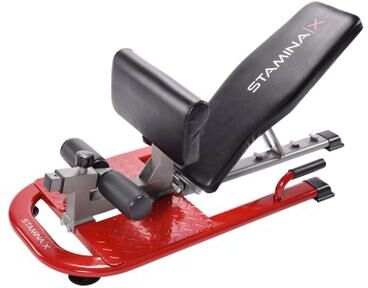
Stamina X 4-In-1 Strength Training Station Home Fitness Equipment by Stamina in Red Black"The Stamina X 4-in-1 Strength Training Station allows you to easily and efficiently sculpt and strengthen your back, chest and legs. Perform assisted squats, sit-ups, push-ups, sit-to-stands, back extensions and more. Traditional ""sissy squat..."229,99 $*Shipping: 48,58 $Secure redirect to the provider
-
Stamina Mini Exercise Bike by Stamina in Purple GreyJust Spin to BeginWhen you're beginning your fitness journey, there's no better way to start than in the comfort of your home or at work in your cubicle. With the upgraded purple Stamina Mini Exercise Bike, you can do just that. In fact, you can use...104,99 $*Shipping: 29,98 $Secure redirect to the provider
-
HarperCollins Children's Books Fitter, Healthier, Happier! by Joe Wicks - Illustrated Kids' Health & Fitness Book - Ages 7-11 - Paperback - Exercise, Nutrition, Sleep & MindsetGet fit, feel happy, and be healthy with this fun and easy-to-understand guide for kids aged 7-11. Written by global fitness phenomenon Joe Wicks, this fully illustrated paperback explains how the body works, why movement matters, how to eat well, and how sleep and mindset support wellbeing. It's perfect for curious young readers who want to learn about staying healthy and happy at home or in the classroom. Learn all about your body and mind with this dynamic, fact-filled children's book from Joe Wicks, best known for his energetic and encouraging style in PE with Joe and Activate.4,99 £*Shipping: 2,99 £Secure redirect to the provider



-
What is the correct utilitarian solution?
The correct utilitarian solution is to maximize overall happiness and minimize overall suffering for the greatest number of people. This means making decisions that result in the greatest net benefit for the majority of individuals, even if it may not benefit everyone equally. Utilitarianism focuses on the consequences of actions and seeks to promote the greatest good for the greatest number, taking into account the well-being of all individuals affected by the decision. It also emphasizes the importance of considering long-term effects and the potential impact on future generations. **
-
What is the utilitarian ethics of Bentham and Mill?
Utilitarian ethics, as proposed by Jeremy Bentham and John Stuart Mill, is a consequentialist theory that focuses on maximizing overall happiness or pleasure and minimizing pain or suffering. According to Bentham, actions should be judged based on their ability to produce the greatest amount of pleasure for the greatest number of people, known as the principle of utility. Mill expanded on this by introducing the concept of higher and lower pleasures, arguing that intellectual and moral pleasures are more valuable than physical pleasures. Both Bentham and Mill believed that the ultimate goal of ethics should be to promote the greatest happiness for the greatest number of individuals. **
-
What are the differences between deontological ethics and utilitarian ethics?
Deontological ethics, also known as duty-based ethics, focuses on the inherent rightness or wrongness of actions themselves, regardless of their consequences. It emphasizes following moral rules and duties, such as telling the truth or keeping promises, based on principles like the categorical imperative. On the other hand, utilitarian ethics, also known as consequentialist ethics, prioritizes the outcomes or consequences of actions. It aims to maximize overall happiness or well-being for the greatest number of people, often through the calculation of benefits and harms. While deontological ethics emphasizes duty and rules, utilitarian ethics prioritizes the greatest good for the greatest number. **
-
What is the difference between deontological ethics and utilitarian ethics?
Deontological ethics, also known as duty-based ethics, focuses on the inherent rightness or wrongness of actions themselves, regardless of their consequences. This means that certain actions are considered morally right or wrong based on whether they adhere to a set of rules or principles. On the other hand, utilitarian ethics, also known as consequentialist ethics, evaluates the morality of actions based on their outcomes or consequences. In utilitarianism, the rightness or wrongness of an action is determined by its ability to produce the greatest overall happiness or pleasure for the greatest number of people. **


How can one justify euthanasia from a utilitarian and deontological perspective?
From a utilitarian perspective, euthanasia can be justified if it results in the greatest overall happiness and minimizes suffering for the individual and their loved ones. If the person is in unbearable pain and their quality of life is extremely poor, euthanasia may be seen as the most compassionate choice to end their suffering. From a deontological perspective, euthanasia can be justified if it respects the individual's autonomy and right to make decisions about their own life and death. If the person has made a well-informed and voluntary decision to end their life, then it can be seen as morally permissible to honor their wishes. However, deontological ethics also emphasize the importance of respecting the sanctity of life, so the decision to pursue euthanasia should be carefully considered in light of these conflicting principles. **
How can euthanasia be justified from a utilitarian and deontological perspective?
From a utilitarian perspective, euthanasia can be justified if it results in the greatest overall happiness and minimizes suffering. If a terminally ill patient is in extreme pain and has no hope of recovery, euthanasia could be seen as a compassionate act that ends their suffering. From a deontological perspective, euthanasia can be justified if it upholds the principle of respecting an individual's autonomy and right to make decisions about their own life. If a person has made a rational and informed decision to end their life, then respecting their autonomy could be seen as a moral duty. However, deontological ethics also emphasize the importance of not treating individuals as mere means to an end, so careful consideration must be given to ensure that euthanasia is not being used for ulterior motives. **
Top-Angebote
Products related to Non-utilitarian:
-
Convenient Shelf,Utilitarian Corner Shelf,Wall Corner BookshelfConvenient Shelf,Utilitarian Corner Shelf,Wall Corner Bookshelf A Perfect Fit - Check out our newest star - a slick and vintage-themed 5-tiered rack. You'll find it to be an ideal fit for any nook and cranny in your house or workspace.206,99 $*Shipping: 0,00 $Secure redirect to the provider
-
Mini Exercise Bike, Blue Home Fitness Equipment by Stamina in BlueWith the Stamina Mini Exercise Bike, you can work your lower or upper body from the comfort of home and even sitting down! Choose between 8 levels of quiet magnetic resistance to increase or decrease the intensity of your workout. The Smooth Pedal...119,99 $*Shipping: 31,98 $Secure redirect to the provider
-
Hay House Uk Nutrition For Intuition Complete Dietary & Wellness Handbook - Non Fiction - PaperbackTitle:. Nutrition for Intuition: Complete Dietary & Wellness Handbook Format: Paperback Overview:. Unlock the transformative power of connecting your physical well-being with your inner guidance through Nutrition for Intuition: Complete Dietary & Wellness Handbook. This comprehensive non-fiction paperback serves as an essential resource for readers seeking to move beyond rigid diet rules and discover a harmonious relationship with food. By blending practical nutritional knowledge with the art of intuitive living, the handbook provides a structured yet flexible roadmap to sustaining long-term health. Readers will explore foundational principles of nourishment that extend past basic caloric counting, delving into how specific dietary choices influence overall vitality, energy levels, and emotional balance. As a cornerstone reference, this guide empowers individuals to decode their body's signals, fostering a lifestyle where informed decisions naturally align with personal wellness goals. Whether you are navigating a shift toward cleaner eating habits or looking to deepen your understanding of how food fuels both mind and spirit, this complete handbook offers the clarity and direction needed to make sustainable changes. It stands as a definitive text for anyone ready to cultivate a deeper, more conscious approach to daily nourishment. Furthermore, the handbook thoroughly examines the role of hydration and restorative rest within the broader nutritional framework, reinforcing that true wellness requires attention to multiple lifestyle variables. Detailed discussions on macronutrient balance and the significance of diverse plant-based nutrients educate readers on building plates that sustain energy throughout the day. Additionally, the text addresses common misconceptions surrounding processed foods and artificial additives, offering clear guidance on selecting wholesome ingredients. This depth of information ensures the reader gains a robust understanding of how nutrition impacts cellular function and immune response, empowering them to make choices that actively defend against fatigue and illness. The guide also acknowledges cultural diversity in dietary traditions, celebrating how global cuisines offer abundant opportunities for intuitive, satisfying meals that honor heritage while supporting modern health standards. The handbook consolidates vital information into an accessible format, eliminating the guesswork often associated with self-directed dietary improvements and offering a cohesive strategy rooted in respect for the body's innate wisdom. Ultimately, this volume bridges the gap between scientific dietary advice and the personal experience of feeling truly vibrant, making it an indispensable tool for the discerning reader dedicated to holistic health. What Makes This Book Stand Out:. What distinguishes Nutrition for Intuition: Complete Dietary & Wellness Handbook is its commitment to a unified perspective on health. Many guides isolate...10,99 £*Shipping: 2,99 £Secure redirect to the provider
-
Stamina X 4-In-1 Strength Training Station Home Fitness Equipment by Stamina in Red Black"The Stamina X 4-in-1 Strength Training Station allows you to easily and efficiently sculpt and strengthen your back, chest and legs. Perform assisted squats, sit-ups, push-ups, sit-to-stands, back extensions and more. Traditional ""sissy squat..."229,99 $*Shipping: 48,58 $Secure redirect to the provider
-
What is a utilitarian action?
A utilitarian action is one that aims to maximize overall happiness or well-being for the greatest number of people. In utilitarianism, the morality of an action is determined by its consequences, with the most ethical action being the one that results in the greatest overall benefit. This ethical theory focuses on the outcomes of actions rather than the intentions behind them. Utilitarian actions prioritize the greatest good for the greatest number of individuals, often requiring individuals to make decisions that may not benefit themselves personally but benefit society as a whole. **
-
Is it utilitarian or selfish?
It depends on the specific situation and context. Utilitarianism is a moral theory that focuses on maximizing overall happiness or well-being for the greatest number of people. If an action benefits the majority of individuals and promotes the greatest good, it can be considered utilitarian. On the other hand, if an action primarily serves one's own interests without regard for others, it may be seen as selfish. Ultimately, the distinction between utilitarian and selfish behavior is determined by the impact on others and the underlying intentions of the individual. **
-
What is the correct utilitarian solution?
The correct utilitarian solution is to maximize overall happiness and minimize overall suffering for the greatest number of people. This means making decisions that result in the greatest net benefit for the majority of individuals, even if it may not benefit everyone equally. Utilitarianism focuses on the consequences of actions and seeks to promote the greatest good for the greatest number, taking into account the well-being of all individuals affected by the decision. It also emphasizes the importance of considering long-term effects and the potential impact on future generations. **
-
What is the utilitarian ethics of Bentham and Mill?
Utilitarian ethics, as proposed by Jeremy Bentham and John Stuart Mill, is a consequentialist theory that focuses on maximizing overall happiness or pleasure and minimizing pain or suffering. According to Bentham, actions should be judged based on their ability to produce the greatest amount of pleasure for the greatest number of people, known as the principle of utility. Mill expanded on this by introducing the concept of higher and lower pleasures, arguing that intellectual and moral pleasures are more valuable than physical pleasures. Both Bentham and Mill believed that the ultimate goal of ethics should be to promote the greatest happiness for the greatest number of individuals. **
Similar search terms for Non-utilitarian
-
Stamina Mini Exercise Bike by Stamina in Purple GreyJust Spin to BeginWhen you're beginning your fitness journey, there's no better way to start than in the comfort of your home or at work in your cubicle. With the upgraded purple Stamina Mini Exercise Bike, you can do just that. In fact, you can use...104,99 $*Shipping: 29,98 $Secure redirect to the provider
-
HarperCollins Children's Books Fitter, Healthier, Happier! by Joe Wicks - Illustrated Kids' Health & Fitness Book - Ages 7-11 - Paperback - Exercise, Nutrition, Sleep & MindsetGet fit, feel happy, and be healthy with this fun and easy-to-understand guide for kids aged 7-11. Written by global fitness phenomenon Joe Wicks, this fully illustrated paperback explains how the body works, why movement matters, how to eat well, and how sleep and mindset support wellbeing. It's perfect for curious young readers who want to learn about staying healthy and happy at home or in the classroom. Learn all about your body and mind with this dynamic, fact-filled children's book from Joe Wicks, best known for his energetic and encouraging style in PE with Joe and Activate.4,99 £*Shipping: 2,99 £Secure redirect to the provider
-
Stamina Wirk Under Desk Exercise Bike by Stamina in GreenNo More Painful Desk ExerciseIf you've tried an under-the-desk cycle before, you know how hard it can be to position yourself into that sweet spot. Luckily, with the Stamina WIRK Under Desk Exercise Bike, you don't have to worry about banging your...159,99 $*Shipping: 33,98 $Secure redirect to the provider
-
440 lbs. Weight Capacity Non-Slip Outdoor Step by North American Health+Wellness in Gray"Large platform makes it easier for those with limited ability to lift their feet and remain steady while stepping up. Comes with a slip-resistant rubber mat. Dimensions: 19 1/4""W x 15 1/2""L x 4""HPP/LDPE/TPRMax. weight: 440 lbs.Use on flat..."49,99 $*Shipping: 16,98 $Secure redirect to the provider
-
What are the differences between deontological ethics and utilitarian ethics?
Deontological ethics, also known as duty-based ethics, focuses on the inherent rightness or wrongness of actions themselves, regardless of their consequences. It emphasizes following moral rules and duties, such as telling the truth or keeping promises, based on principles like the categorical imperative. On the other hand, utilitarian ethics, also known as consequentialist ethics, prioritizes the outcomes or consequences of actions. It aims to maximize overall happiness or well-being for the greatest number of people, often through the calculation of benefits and harms. While deontological ethics emphasizes duty and rules, utilitarian ethics prioritizes the greatest good for the greatest number. **
-
What is the difference between deontological ethics and utilitarian ethics?
Deontological ethics, also known as duty-based ethics, focuses on the inherent rightness or wrongness of actions themselves, regardless of their consequences. This means that certain actions are considered morally right or wrong based on whether they adhere to a set of rules or principles. On the other hand, utilitarian ethics, also known as consequentialist ethics, evaluates the morality of actions based on their outcomes or consequences. In utilitarianism, the rightness or wrongness of an action is determined by its ability to produce the greatest overall happiness or pleasure for the greatest number of people. **
-
How can one justify euthanasia from a utilitarian and deontological perspective?
From a utilitarian perspective, euthanasia can be justified if it results in the greatest overall happiness and minimizes suffering for the individual and their loved ones. If the person is in unbearable pain and their quality of life is extremely poor, euthanasia may be seen as the most compassionate choice to end their suffering. From a deontological perspective, euthanasia can be justified if it respects the individual's autonomy and right to make decisions about their own life and death. If the person has made a well-informed and voluntary decision to end their life, then it can be seen as morally permissible to honor their wishes. However, deontological ethics also emphasize the importance of respecting the sanctity of life, so the decision to pursue euthanasia should be carefully considered in light of these conflicting principles. **
-
How can euthanasia be justified from a utilitarian and deontological perspective?
From a utilitarian perspective, euthanasia can be justified if it results in the greatest overall happiness and minimizes suffering. If a terminally ill patient is in extreme pain and has no hope of recovery, euthanasia could be seen as a compassionate act that ends their suffering. From a deontological perspective, euthanasia can be justified if it upholds the principle of respecting an individual's autonomy and right to make decisions about their own life. If a person has made a rational and informed decision to end their life, then respecting their autonomy could be seen as a moral duty. However, deontological ethics also emphasize the importance of not treating individuals as mere means to an end, so careful consideration must be given to ensure that euthanasia is not being used for ulterior motives. **
* All prices are inclusive of VAT and, if applicable, plus shipping costs. The offer information is based on the details provided by the respective shop and is updated through automated processes. Real-time updates do not occur, so deviations can occur in individual cases. ** Note: Parts of this content were created by AI.